 |
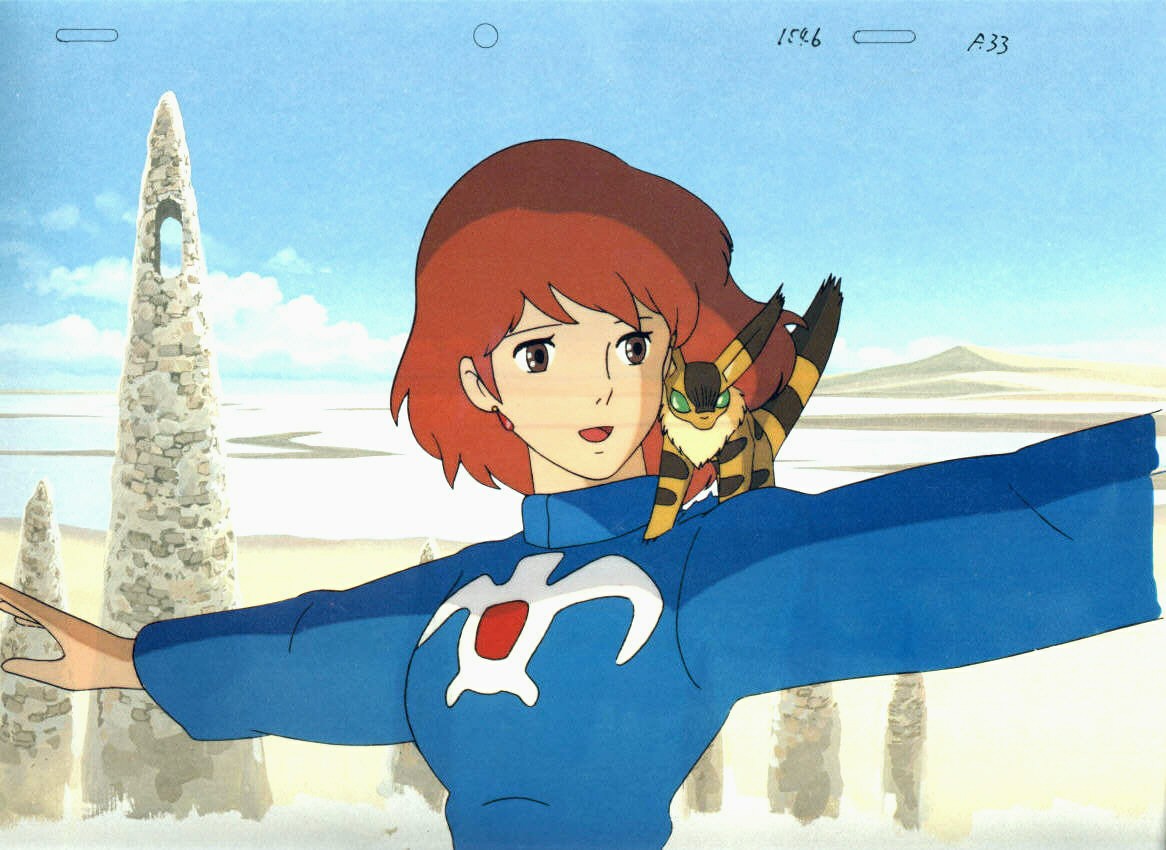
| Naussicaa with her pet...squirrel-thing. |
Monday, April 23, 2012
Coats; Naussicaa

Monday, April 9, 2012
Coats; Princess Mononoke
Princess Mononoke is an epic Japanese historical-fantasy written and directed by the great Miyazaki. In this film, many characters struggle with the existence of good and evil within themselves. Let's look at two specific characters from the film:
San

A quick-witted and fierce princess who was raised in the forest by wild wolf-gods (pretty awesome, I know). Her main focus is protecting the forest and keeping the natural world she lives in safe from outsiders. She is seen as a heroine to the forest because of her protection from the iron-city. However, from the perspective of those who inhabit the iron-city, San is seen as evil villian only trying to destroy the city they've worked so hard to create. A fine example of the contrasting existence of good and evil within San. Next, let's take a look at San's main rival:
Lady Eboshi

I immediately got the evil vibe from Lady Eboshi. Just something about her didn't sit well with me. Anyways, Lady Eboshi is the leader of iron town and is responsible for new iron-based technology, as well as for the contamination of the forest. In iron town, she's seen as a savior and a kind-hearted, accepting woman. She takes in those who are seen as undesirable to society, such as lepers and "working girls", and gives them new purpose in life. On the otherhand, she's also responsible for contaminating the forest with hatred and causing these giant beast-like animal gods to become mad. So of course, she can be seen as a villain from San's perspective, as she is destroying everything that is pure about the forest.
Both of these women demonstrate the existence of both good and evil within themselves that is brought upon by their own personal desires and passions. This story is relavent to every day life, because good and evil exists within all of us and our morals are tired and questioned nearly every day. It's this balance that makes us human, as it is only the gods who are purely good and purely evil.
San
A quick-witted and fierce princess who was raised in the forest by wild wolf-gods (pretty awesome, I know). Her main focus is protecting the forest and keeping the natural world she lives in safe from outsiders. She is seen as a heroine to the forest because of her protection from the iron-city. However, from the perspective of those who inhabit the iron-city, San is seen as evil villian only trying to destroy the city they've worked so hard to create. A fine example of the contrasting existence of good and evil within San. Next, let's take a look at San's main rival:
Lady Eboshi
I immediately got the evil vibe from Lady Eboshi. Just something about her didn't sit well with me. Anyways, Lady Eboshi is the leader of iron town and is responsible for new iron-based technology, as well as for the contamination of the forest. In iron town, she's seen as a savior and a kind-hearted, accepting woman. She takes in those who are seen as undesirable to society, such as lepers and "working girls", and gives them new purpose in life. On the otherhand, she's also responsible for contaminating the forest with hatred and causing these giant beast-like animal gods to become mad. So of course, she can be seen as a villain from San's perspective, as she is destroying everything that is pure about the forest.
Both of these women demonstrate the existence of both good and evil within themselves that is brought upon by their own personal desires and passions. This story is relavent to every day life, because good and evil exists within all of us and our morals are tired and questioned nearly every day. It's this balance that makes us human, as it is only the gods who are purely good and purely evil.
Coats; Grave of the Fireflies
| Image taken from here. |
Coats; Ghost in the Shell
| "Kill all the humans" |
Subscribe to:
Comments (Atom)